A SUCCESS STORY: MILAS UYKU VALLEY AGRICULTURAL COOPERATIVE
Milas Uyku Valley Agricultural Cooperative is the name of a production structure formed by a group of individuals who believe that the key to Turkey’s development lies in agriculture, and that agriculture gains value and strength through cooperative organization.
Agriculture is one of the three strategic domains shaping both the present and the future of humanity: water, energy, and agriculture-food. Considering that nearly 70% of water resources are used in agriculture, its significance becomes even more evident. Agriculture is nourishment, it is food, it is life—it is the very source of existence.
Due to global sociological and demographic shifts—such as population growth, aging populations, urbanization, migration away from rural areas, and distancing from agriculture—fewer farmers are now required to produce for a significantly larger population each year. This is because the agricultural population is declining worldwide.
As of 2023, while the global population is estimated by the United Nations to be 8.045 billion, agricultural production is carried out by approximately 570 million farms, of which nearly 510 million are family-run enterprises. These family businesses account for 80% of total production. In other words, global agricultural production is largely sustained by small-scale family operations—a reality that also applies to our country. Approximately 2.1 million registered farmers in Turkey strive to feed the entire population while also contributing to exports.
INCREASING IMPORTANCE OF ORGANIZED STRUCTURES
In our country, agricultural land spans 23.8 million hectares, divided into 32 million parcels, owned by 40 million stakeholders, with an average farm size of 6 hectares. Of the 15.3 million hectares currently cultivated, approximately 7 million hectares are dedicated to wheat production.
These figures clearly demonstrate that organized and large-scale agricultural production structures are becoming increasingly critical for both our country and the world.
Taking olive production in Muğla—where the cooperative was established—as an example: there are 26,768 registered farmers cultivating 1,132,976 decares of land, with an average of 42 decares per farmer.
Across the province, 148,996 tons of olives are produced annually from 950,000 decares of olive groves, corresponding to an average yield of 156 kg per decare. Accordingly, a producer with 42 decares of land generates approximately 6.5 tons annually. After deducting production, harvesting, and transportation costs, the remaining income is often insufficient to sustain the farmer’s livelihood.
All these realities highlight a critical need: for large-scale family farms—bearing the burden of feeding humanity yet facing challenges in scale, cost, market access, knowledge, and capital—to sustain production, access to organized structures, knowledge, capital, and markets is vital. One of the most effective instruments to achieve this is the establishment of exemplary cooperatives.
QUALITY AND SUSTAINABILITY
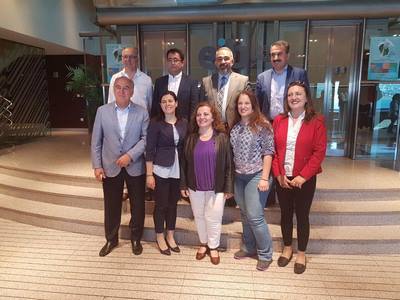
Milas Uyku Valley Agricultural Cooperative was established within this framework, led by a group of bureaucrat friends primarily based in Ankara but whose hearts and roots remain in rural lands.
When the founding partners embarked on this journey in 2016, they defined two primary objectives:
First, to produce olive oil of exemplary quality that would help elevate one of our country’s most valuable products—olive and olive oil—to the standards it truly deserves.
Second, recognizing that olive oil quality begins with high-quality olive cultivation—starting from proper orchard care—to bring olive producers together, consolidate management, and implement collaborative production models. This approach aims to enhance sustainability for family farms while creating value in olive production.
With these goals, the cooperative founders planted their first seed by acquiring an olive grove in Muğla’s Milas district (10 km from the town center), located along the Bodrum–Milas highway.
Benefiting from rural development grants provided by the Ministry of Agriculture and Forestry, the cooperative inaugurated in the autumn of 2019 an olive oil production facility with a capacity of 60 tons per day—an advanced technological investment rarely seen in Turkey.
A MODERN FACILITY
This facility has filled a significant gap in the region, where modern-standard olive oil production facilities were extremely limited. Olive producers aiming to produce high-quality olive oil and build strong brands often struggled to find facilities that could meet their desired standards.
Within this framework, the cooperative offers both members and non-members the opportunity to process their olives, evaluate their oils independently, and benefit from services such as storage, bottling, and even private-label production.
At the same time, close collaboration with local farmers through contract farming agreements has expanded a broader agricultural community’s connection to the cooperative, encouraging high-quality olive production. In the second year of operation alone, partnerships were established with approximately 100 farmers, with this number steadily increasing.
CONTRIBUTION TO TOURISM
While expanding collaborative production models with local farmers in orchard management, harvesting, and olive oil processing, the cooperative is also actively working on agro-tourism initiatives that combine the region’s olive potential with its tourism opportunities.
With a project planned for 2023, a unique and exemplary experience area will be created along the Bodrum–Milas highway under the concept of “The Story of the Olive, The Journey of Olive Oil, and the Olive Workshop.”
In this space, both local and international visitors will have access to comprehensive visual and physical information about olives and olive oil, participate in tastings, observe presentations, and enjoy time in olive groves with their children. Additionally, visitors will be able to create handmade souvenirs such as necklaces, bracelets, and prayer beads from olive pits in the workshop and take them home free of charge. They will also have the opportunity to purchase products crafted through the labor of local farmers.
Milas Uyku Valley Agricultural Cooperative continues its operations with a strong focus on producing high value-added, premium-quality products throughout all stages—from grove to bottling—supported by a rigorous quality control process and an environmentally conscious production model that prioritizes human health.
SECTORAL STAKEHOLDERS
The cooperative carries out its activities in close collaboration with numerous civil society organizations such as the Olive Oil Academy and the Boutique Olive Producers Association, as well as local authorities and regional offices of relevant ministries.
Our goal is to contribute to the rising quality of Turkish olive oil brands and to help Turkish olive oil secure its rightful place in global markets.
Believing that collective effort—moving forward together with a shared voice and spirit—brings greater meaning and abundance, cooperative members willingly embrace the sacrifices required.
We wish for this journey to be an enjoyable one—together.

Leave a Reply
Want to join the discussion?Feel free to contribute!