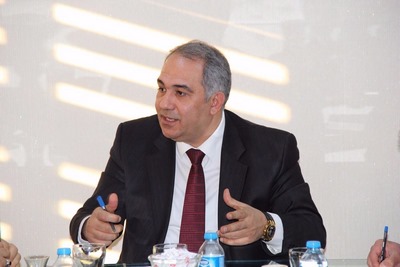
The President of the Board of Directors of the Olive Friends Association, Murat Çetin, made statements aimed at eliminating the misinformation surrounding the latest version of the draft law, which passed through the commission and includes the proposed amendments to the Olive Cultivation Law.
The Olive Friends Association calls for the proposed amendments to Law No. 3573 on the Improvement of Olive Cultivation and Grafting of Wild Species to be evaluated with a non-partisan understanding and ultimately shelved. According to the latest version of the draft, Article 20 of the law is being amended in a way that would pave the way for mining activities and industrialization in olive grove areas under the justification of “public interest.”
Murat Çetin, President of the Olive Friends Association, stated that they met with members of the Industry Commission who signed the draft on May 30–31, and noted that some of the sector’s demands had been taken into consideration and removed from the proposal. Nevertheless, Çetin underlined that the final form of the draft remains far from satisfactory for olive producers and the wider public.
Article 20 of Law No. 3573 on the Improvement of Olive Cultivation and Grafting of Wild Species—regarded as the protective shield of olive groves—states: “Within olive grove areas and within a minimum distance of 3 kilometers from these areas, no facility other than olive oil factories may be established or operated if it emits chemical waste, dust, or smoke that may hinder the vegetative and generative development of olive groves. The construction and operation of olive oil factories and small-scale agricultural industrial enterprises in these areas are subject to the permission of the Ministry of Agriculture and Rural Affairs. Olive grove areas may not be reduced.”
However, in the latest draft approved by the Industry Commission, this article has been relaxed, making it possible—under the condition of “public interest”—to establish mining enterprises, quarries, and industrial facilities in olive grove areas, and even to cut down olive trees. A fine of 4,000 Turkish lira would be imposed per tree cut. The authority to grant such permission would rest with a protection board chaired by the governors.
THE PUBLIC HAS BEEN MISINFORMED
Murat Çetin, President of the Olive Friends Association, stated that in Ankara, as representatives of both the Association and the sector, they conveyed the sector’s demands to commission-member parliamentarians. He emphasized that following these meetings, a false perception emerged in the public sphere suggesting that a consensus had been reached. Stressing that olive growers are now facing an outcome they did not desire, Çetin stated that they do not regard the continued legal protection of olive groves as a matter of political leverage, and that they will continue to voice their demands with conviction through a supra-political approach.
President Çetin stated:
“We held our meetings with members of parliament at the Grand National Assembly. As the Olive Friends Association, together with representatives of the National Olive and Olive Oil Council and Tariş, we visited other parliamentarians as well. Members of the commission addressed, with full awareness, each and every issue that needed to be discussed. We distributed our press statement to all commission members. Our effort was to ensure that this amendment would be completely removed from the omnibus bill and referred to the Agriculture Commission. This did not happen.
We approach this issue with a non-partisan understanding. We act with this mindset and continue our efforts on behalf of our sector.
The highly debated Article 20 has now passed through the commission… This article both establishes a board under the governorship and grants these boards the authority to strip olive grove areas of their protected status. At the same time, under the concept of ‘public interest,’ it opens the way for the establishment of industrial and mining areas. This is not an outcome we wanted. There is information suggesting that the draft may be brought before the General Assembly within a week. The public has been misinformed; through ‘breaking news’ narratives, the impression has been created that the draft passed through the commission by way of consensus and mutual agreement.”
On the other hand, the provision that would have allowed zoning plan changes in olive grove areas—thereby permitting the construction of housing and tourism facilities—was removed from the draft following the meetings.